Why to book your flights with Din Tur
Les mer


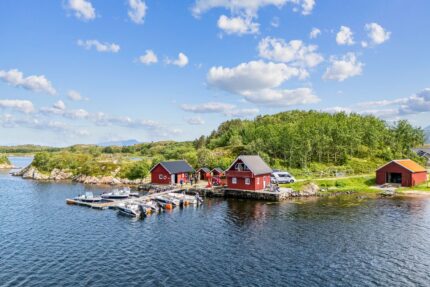
Foto: Vibeke S. Aubert
For many of our guests, travelling to Norway by car and ferry is the calmest and most predictable way to start a fishing holiday. There are no baggage limits to worry about, your gear stays with you from door to door, and the first night on board becomes part of the holiday itself – not a leg of the trip you simply have to get through.
Below you will find what you need to know about the three most-used routes from Germany and Denmark, what you can bring with you, and what is worth planning ahead.
Color Line is Norway’s largest cruise and ferry operator, and the Kiel – Oslo route is considered the classic crossing for guests travelling from Germany. The journey takes around 20 hours, and the two vessels MS Color Magic and MS Color Fantasy are built as cruise ferries with cabins in several categories, à la carte and buffet restaurants, bars and evening entertainment.
You board in the afternoon in Kiel, have dinner as the ship glides out of Kiel Fjord, and wake the next morning to the approach through the Oslofjord – one of the most striking fjord landscapes in the country. From Oslo you drive straight off the car deck and continue towards your fishing destination.
Best for: guests heading to Eastern Norway, Trøndelag or further north, who want the crossing itself to feel like part of the holiday.
Fjord Line is Norway’s second-largest ferry operator and runs several routes from Hirtshals on the northern tip of Jutland. That gives you the flexibility to choose where on the west coast you put your wheels down first.
Hirtshals – Kristiansand: approx. 2 hours 25 minutes on the high-speed ferry. Practical if you are continuing along the southern coast or heading north along the E39.
Hirtshals – Stavanger: overnight ferry, approx. 11 hours. You sleep through the Skagerrak and wake up to the Boknafjord outside your cabin window.
Hirtshals – Bergen: overnight ferry, approx. 16 hours, with the approach through the Bjørnafjord in the morning.
The final stretch before docking in Bergen passes through a landscape where mountains drop straight into the sea. For many guests, this is the moment the holiday really begins.
“We drive down on Friday, sleep on the ferry, and we’re at the cabin by Saturday morning. The car is already packed with rods, waders and a cool box – we don’t lose a single fishing day to travel.” — Henrik, returning guest with DinTur since 2019
Best for: guests heading to the west coast, from Lindesnes in the south to the Sognefjord further north.
If you prefer a shorter sea crossing and more control over your arrival time, Rostock – Trelleborg is a strong option. Stena Line is one of Europe’s largest ferry operators and runs several daily departures on this route, with a crossing time of around 6 hours. You can choose between a reserved seat, an economy cabin or an outside cabin with a window.
Once you arrive in Trelleborg, you still have a fair drive ahead of you through Sweden before crossing the Norwegian border at Svinesund or Magnormoen – but you are behind the wheel, and you can stop when you wish. Many guests break the journey with an overnight stay along the way, often in Värmland or near Lake Vänern.
Best for: guests who want a shorter sea crossing, enjoy driving, and prefer to split the journey across two days.
Foto:Lars Ørjan Nese

This is where car and ferry truly set themselves apart from flying. You can bring everything you need, and then some: rods in their full cases, waders, a cool box with vacuum bags for the return journey, your drone, the coffee machine you actually like, and the food you know the local shop near the cabin will not stock.
Do bear in mind the customs rules when crossing into Norway. Alcohol and tobacco allowances are checked regularly at the ports, particularly in Kristiansand and Oslo. The allowances are set by the Norwegian Customs Authority (Tolletaten), and it is worth checking the current limits before you travel.
For the fishing season between May and August, booking early matters. In our experience, the popular departures fill up quickly, and cabin prices rise the closer you get to the date of travel. Two things in particular are worth keeping in mind:
Weekend departures in June and July are often fully booked already in March.
Cars with a trailer or motorhomes require a separate booking and cost more – reserve early.
Plan to arrive at the port at least 60 minutes before departure. Check-in, customs and loading take time, especially on the larger overnight ferries.
Even though luggage space is virtually unlimited, a few practical points are worth considering in advance:
Sea conditions: the Skagerrak can be rough in autumn and winter. If you are prone to seasickness, the larger overnight ferries handle the swell better than the smaller high-speed crossings.
Total travel time: from your home in Germany to the cabin in Norway, the door-to-door journey is typically 18 to 30 hours depending on the route and how far north you are heading. Plan accordingly.
Fuel: fill up in Sweden or Denmark before crossing the border. Petrol and diesel are noticeably more expensive in Norway.
Tolls: Norway uses the AutoPASS system. Register your vehicle at epass24.com before you travel to avoid invoicing fees later on.
Not sure which route suits your destination?
Our travel specialists know the routes, the ferry operators and the roads beyond the port. Tell us where you are going fishing, and we will suggest the simplest combination of ferry and driving route – and handle the booking for you in one step.
→ Get in touch, and we will find the right solution together.